How did they build that?
Build PICS from
“The Incredible Journey”


The build & install.
See the “guts” BELOW
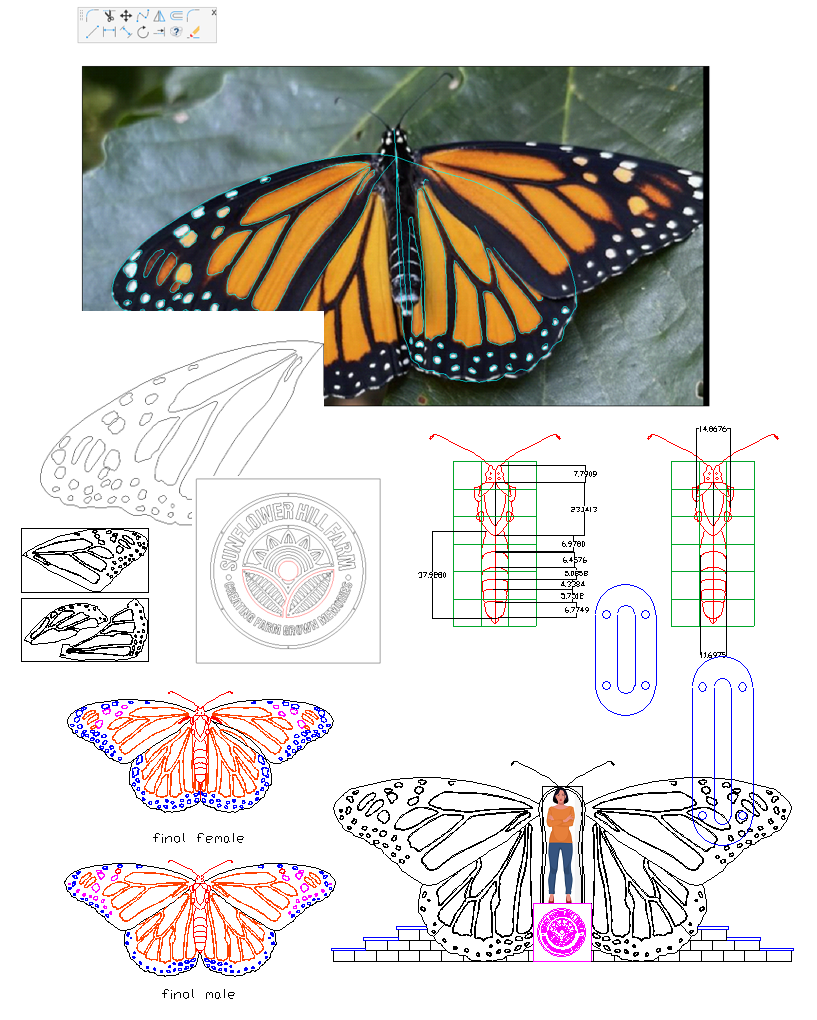
Trace a real butterfly and scale it... AutoCAD -coolest tool ever
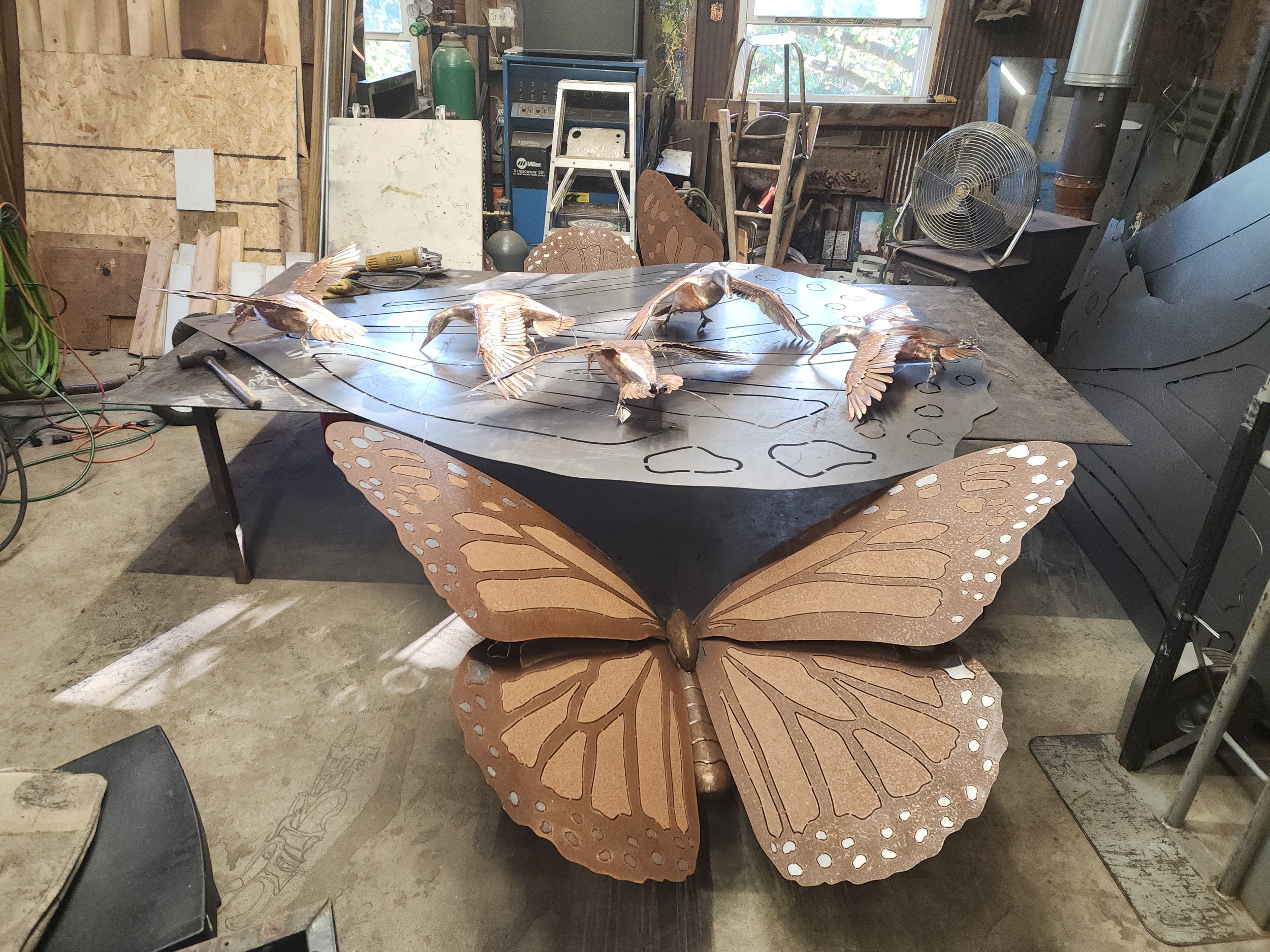
A small maquette to work out some ginks
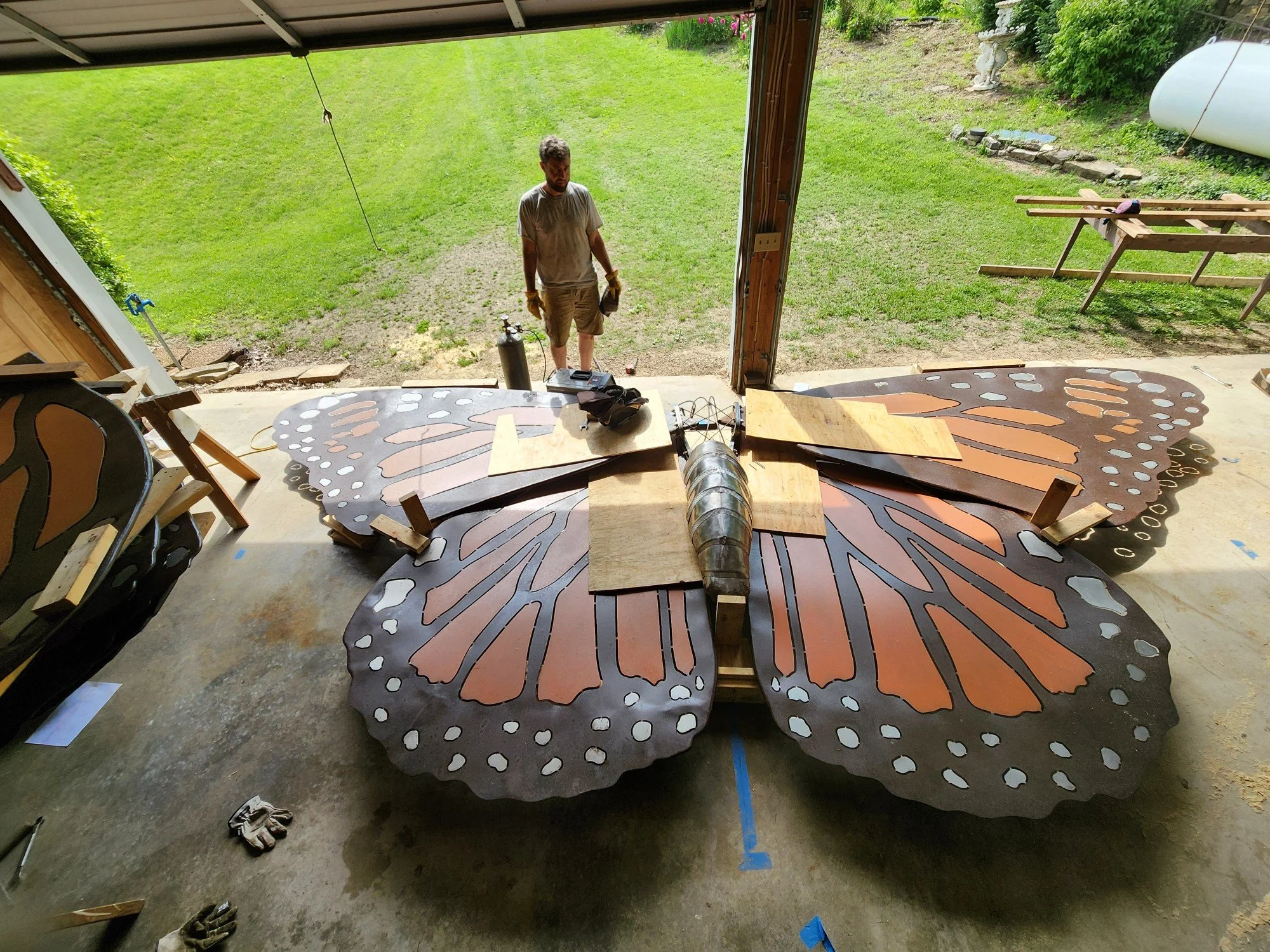
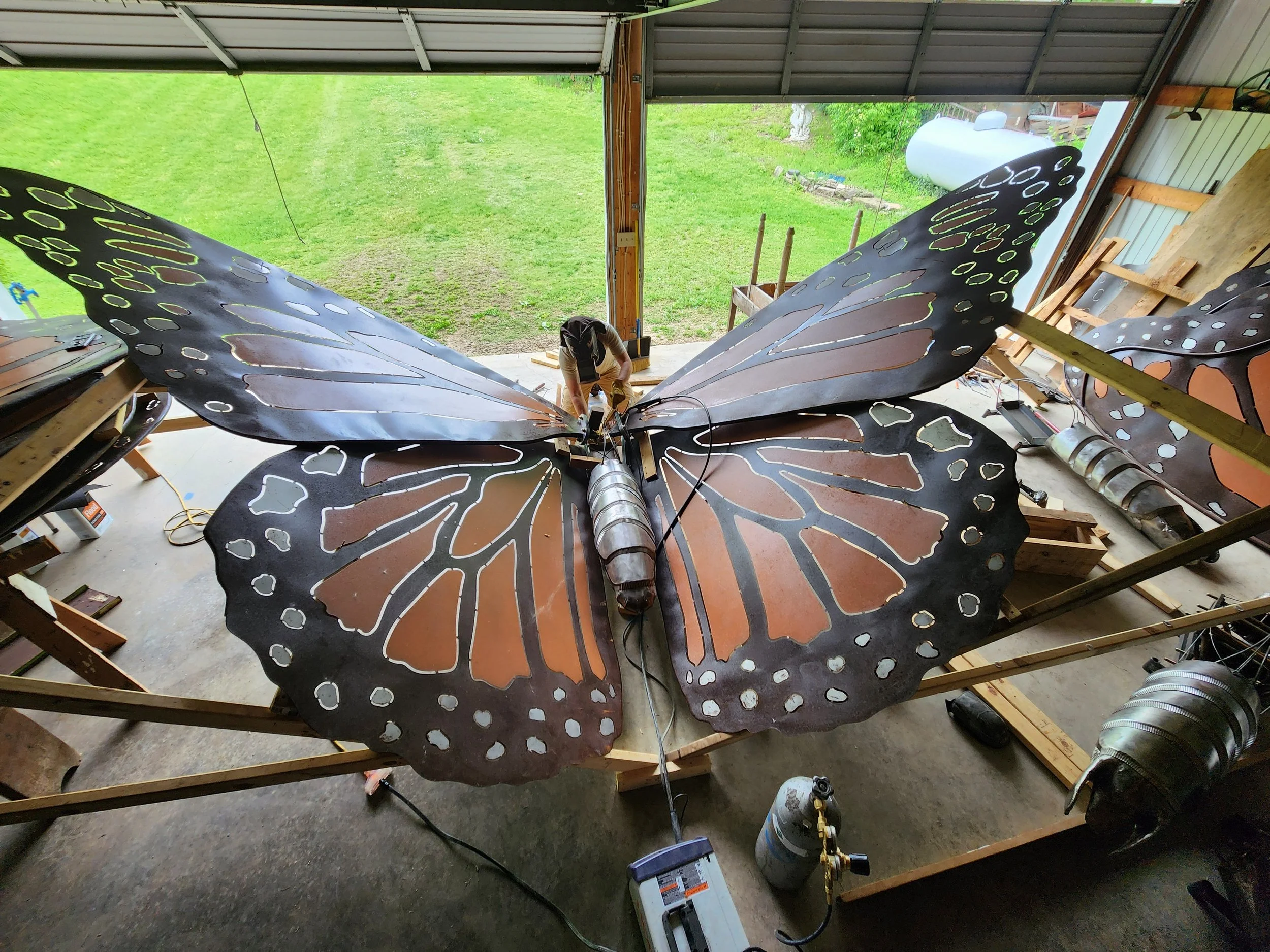
This picture really shows the scale -20'

Pipe bushings provide linear alignment for mounting and provide plenty of weld area
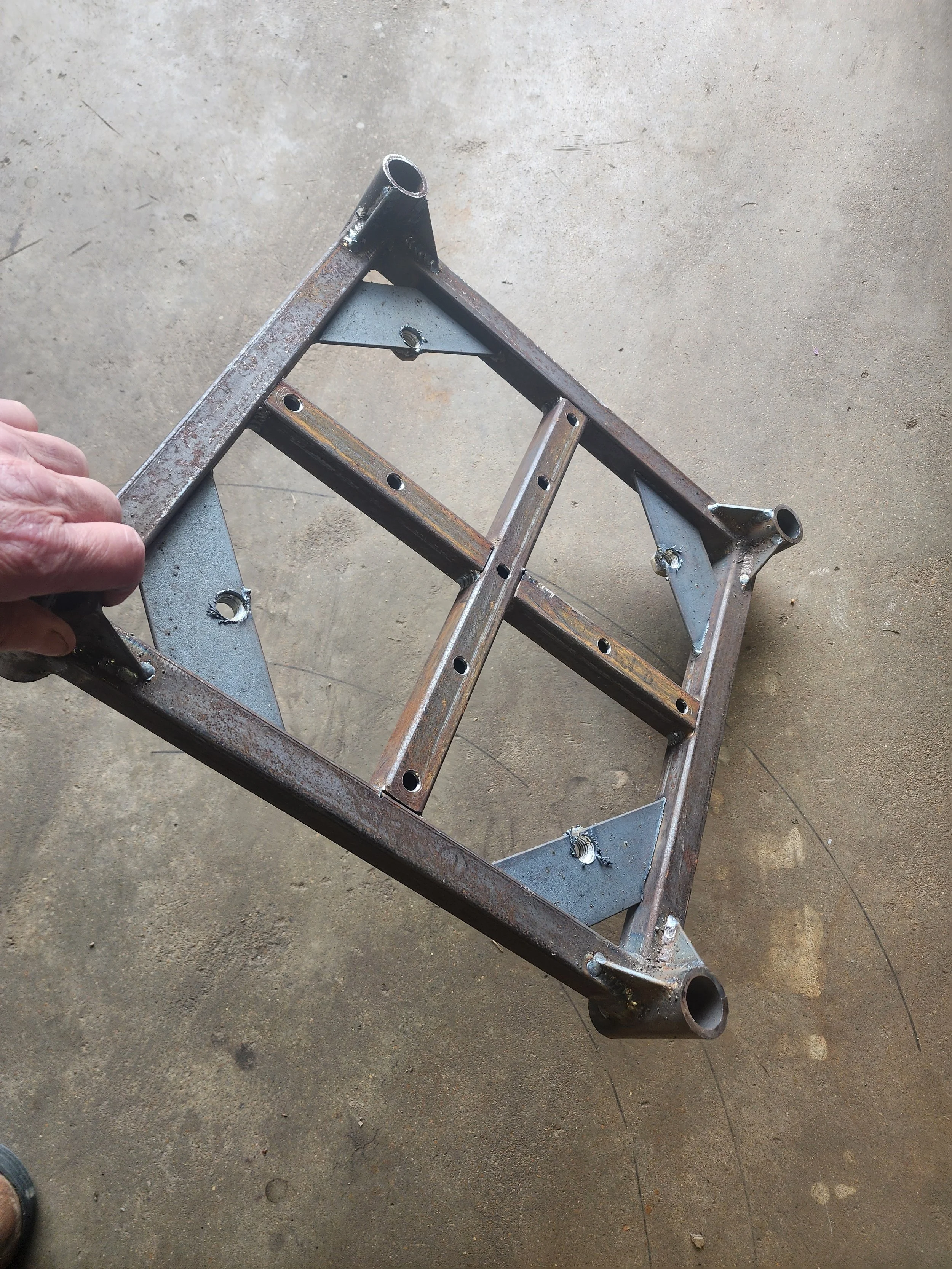
This jig was used to create all of the bodies and drill the holes in the bluff. Perfect alignment

Heavy C-channel used for body mounting plates

(3) Females. (3) Males -One is the Selfie Station (not shown here)

There are 3 different body positions, each requiring its own flange orientation.

male and female armatures
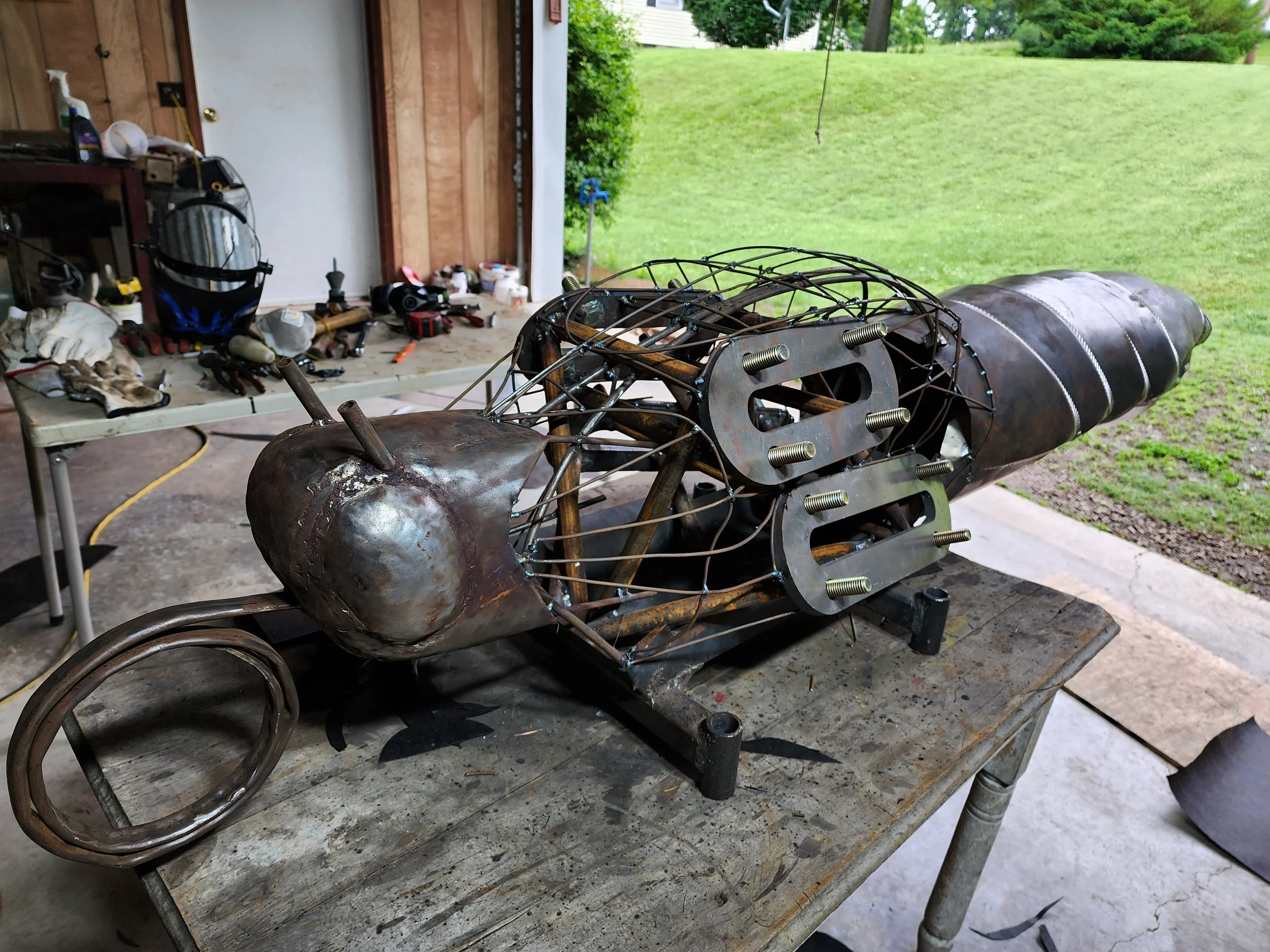
"Wings straight out" model
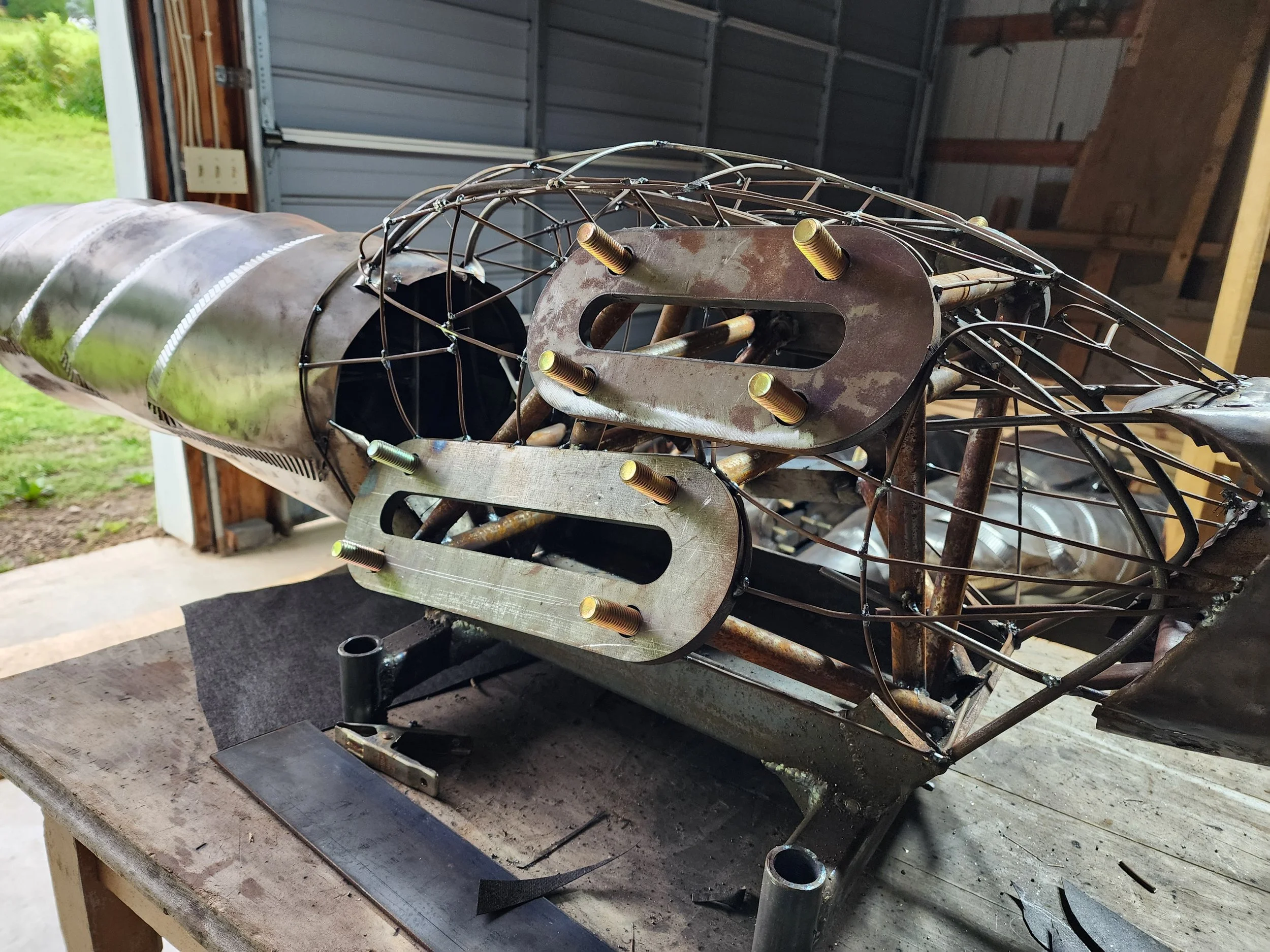
"Wings at 45 degree" model
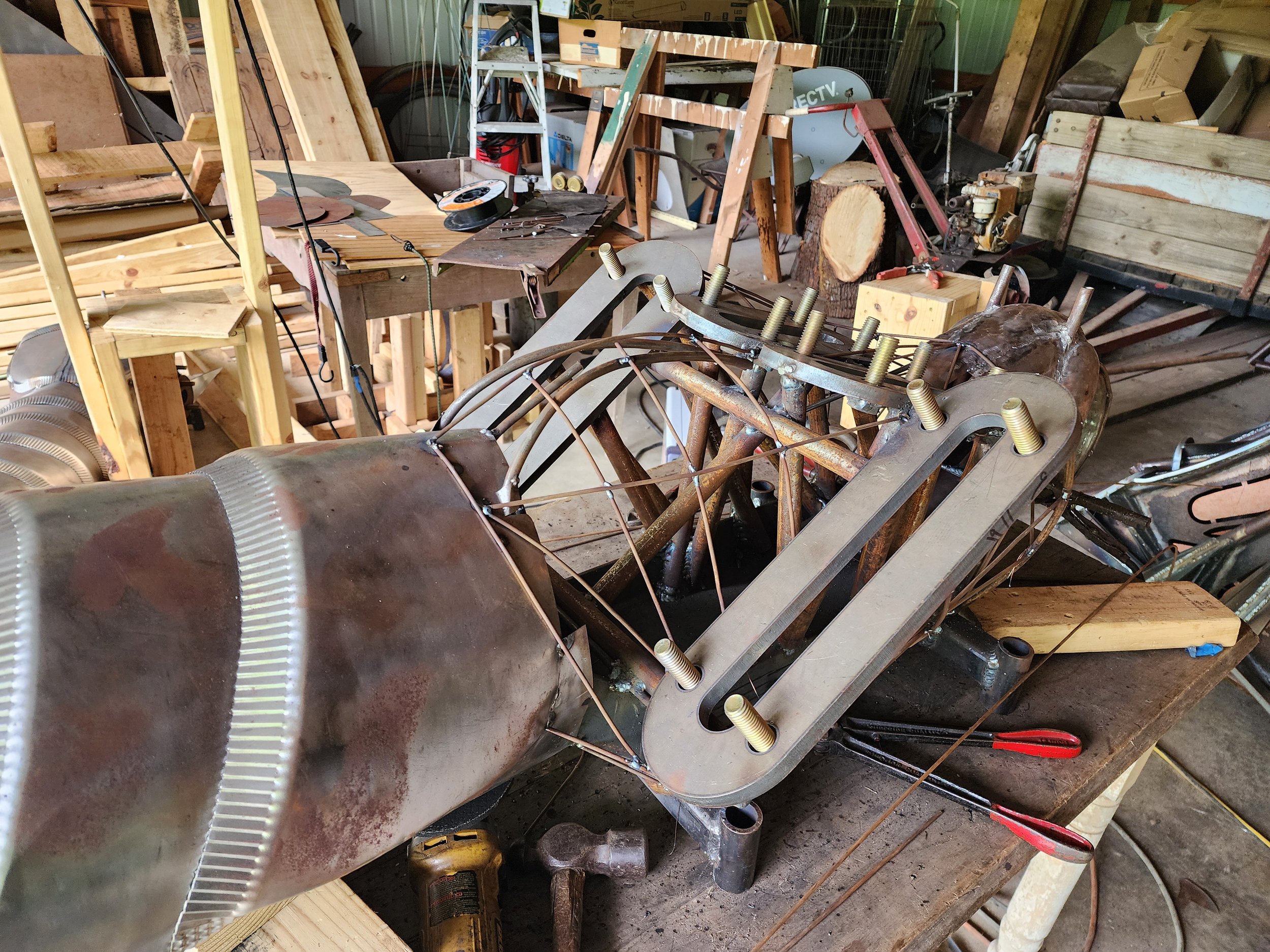
"Wings straight back" (tent) model

Plenty of triangulation transfers load precluding tensile failure

The bodies were created using sheet steel and hand formed

Lots of tar paper templates for creating body sections
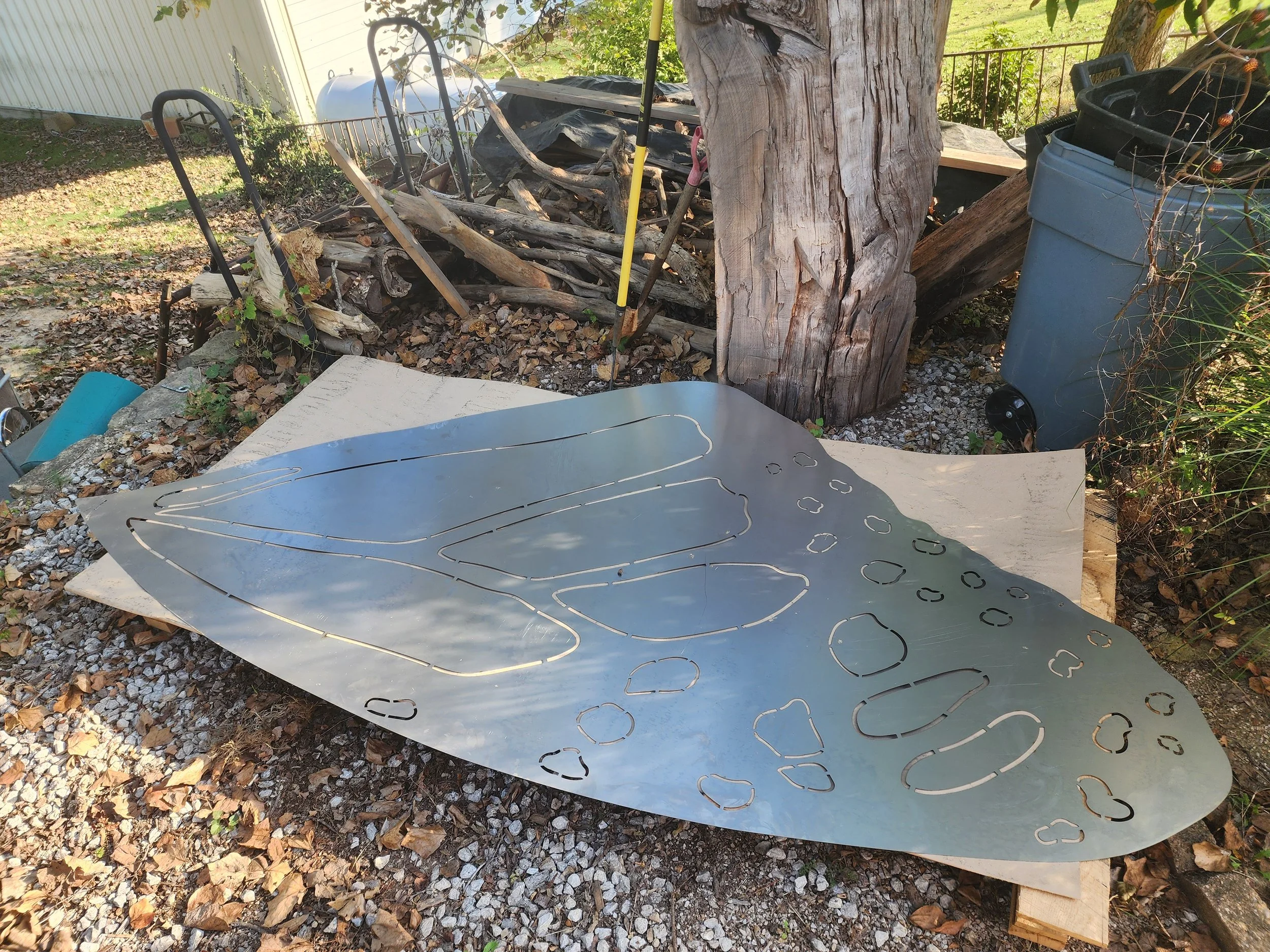
Arrival from Sahm Welding and Fabrication BIG Laser fun
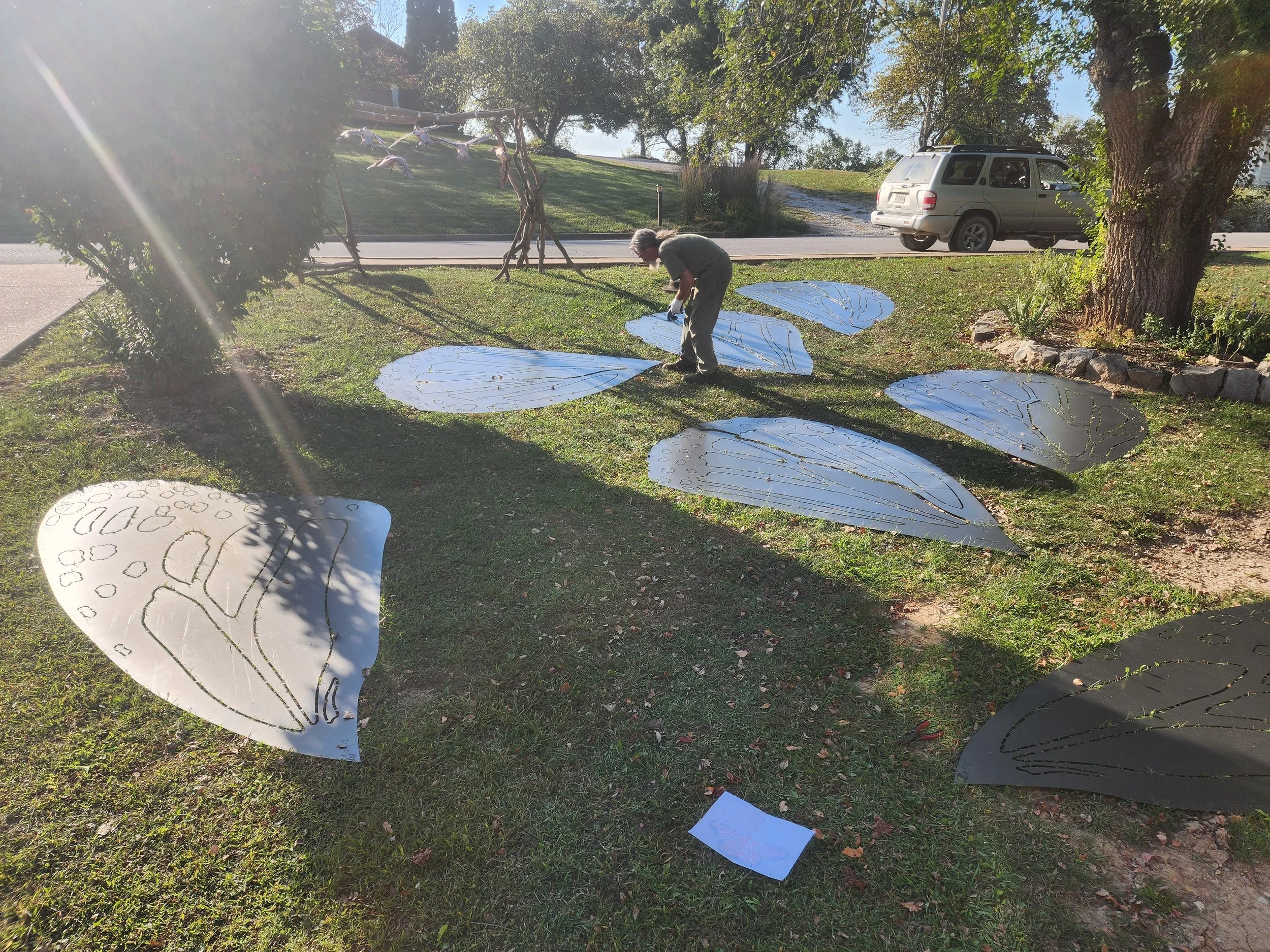
Figuring out what goes where

Oil is removed by soapy wash followed by mineral spirits

Ben reinforced with wing edges with telescoping pipe so it would taper

Totally custom tools used to rotate wing pipes to clean them for rusting

Large flanges to distribute wing flex to body cage
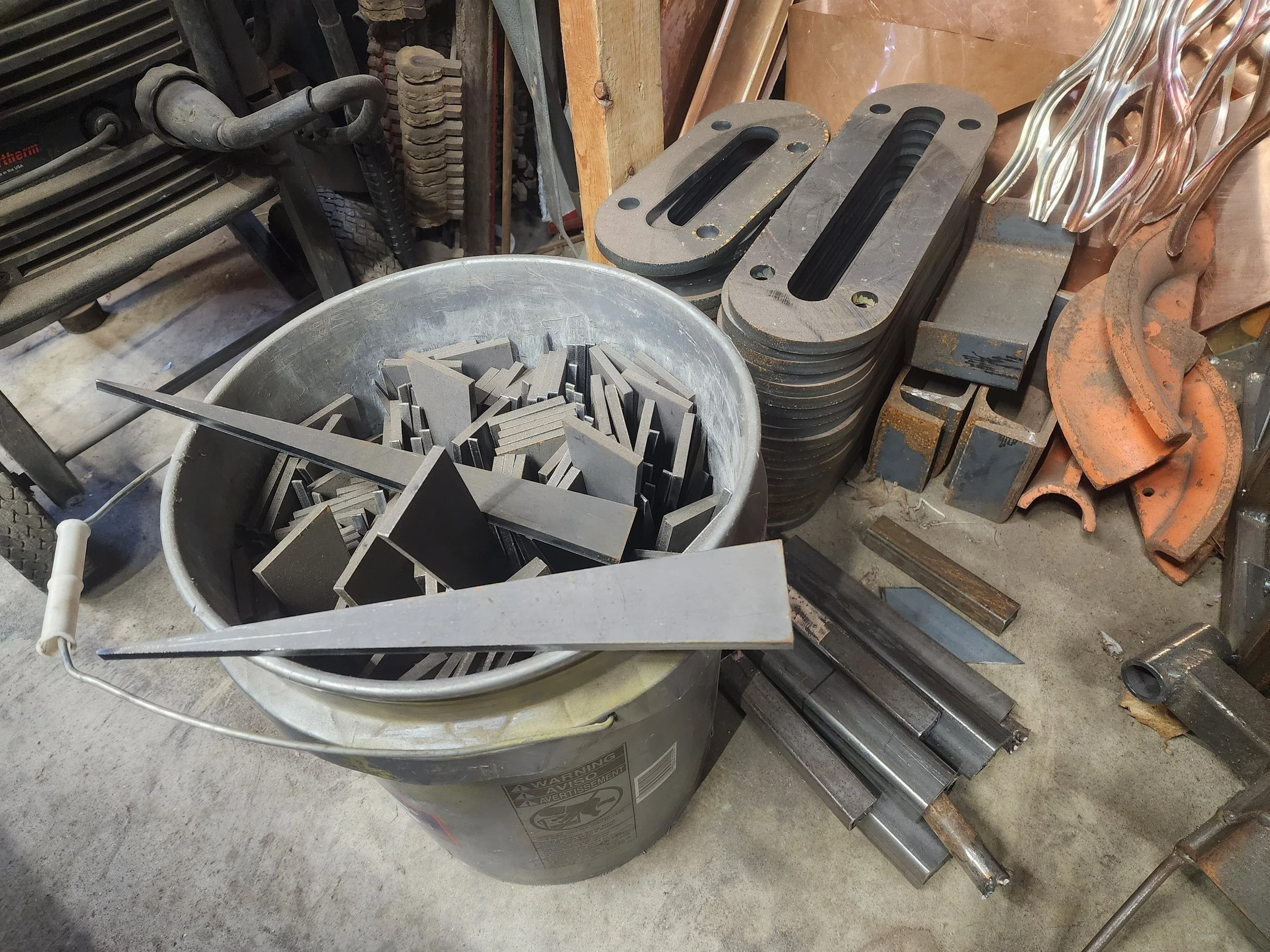
Very heavy bucket of wing gussets

Here the wing has been surface rusted

20 different wings (4-per butterfly)

A slight amount of pigment has been added to the surface treatment to give some color to the rust

2 coats in-backside

3 coats in on the backside, spots are coated bare metal
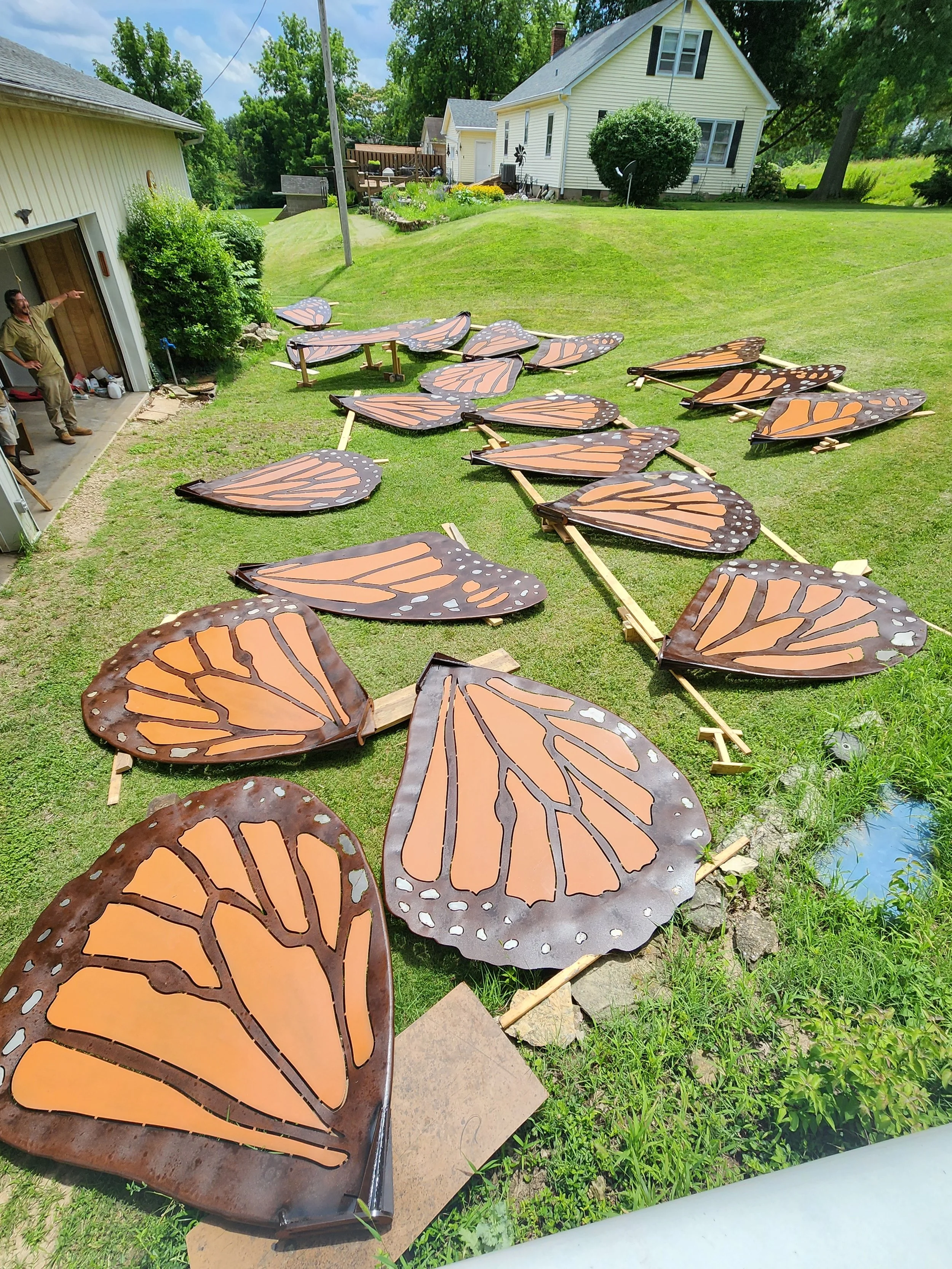
They will eventually return to rust and lose their color. 4 per butterfly. 20 total-both sides

Bodies in various stages of finish
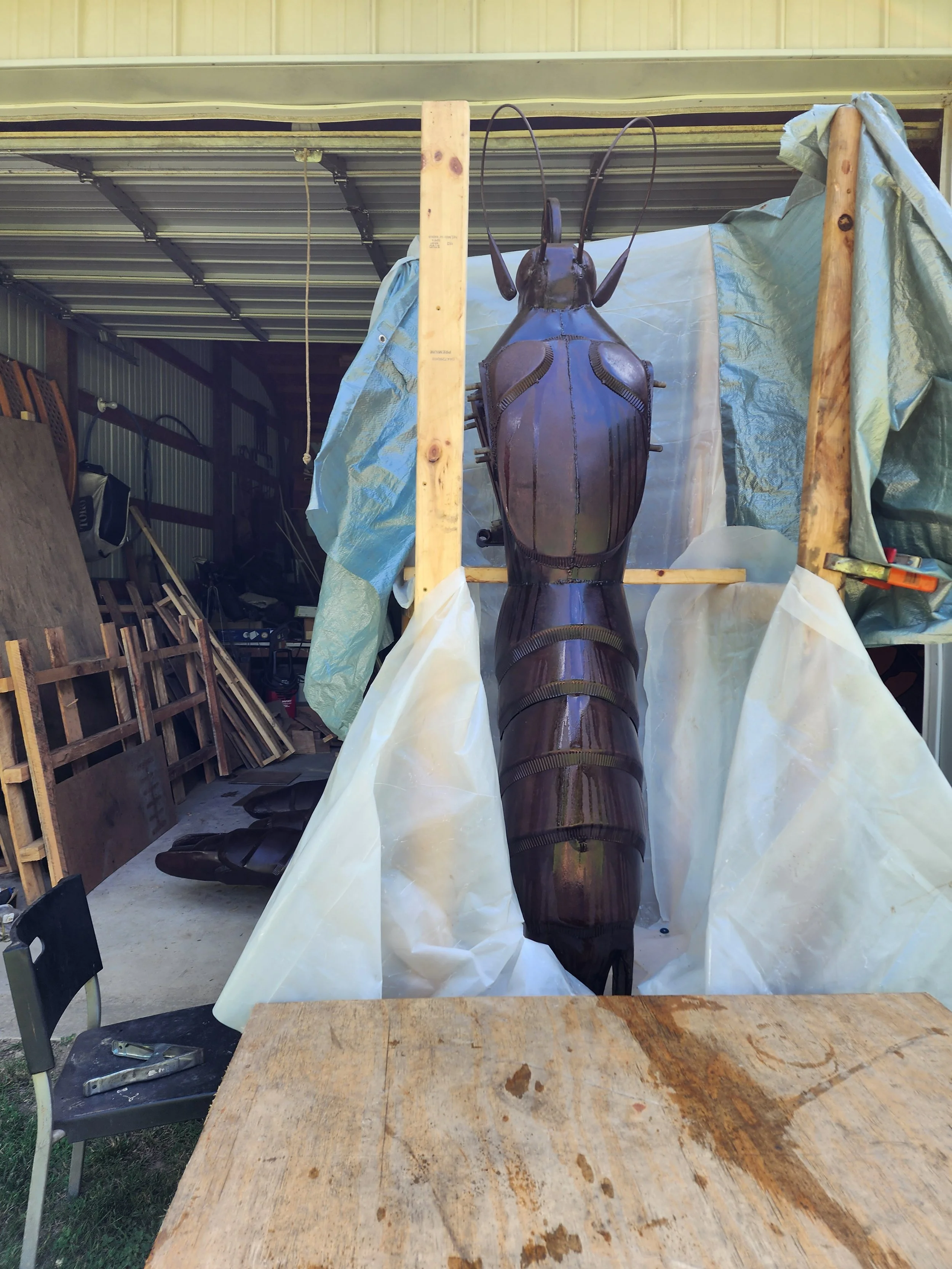
treating the internals for long lasting fun
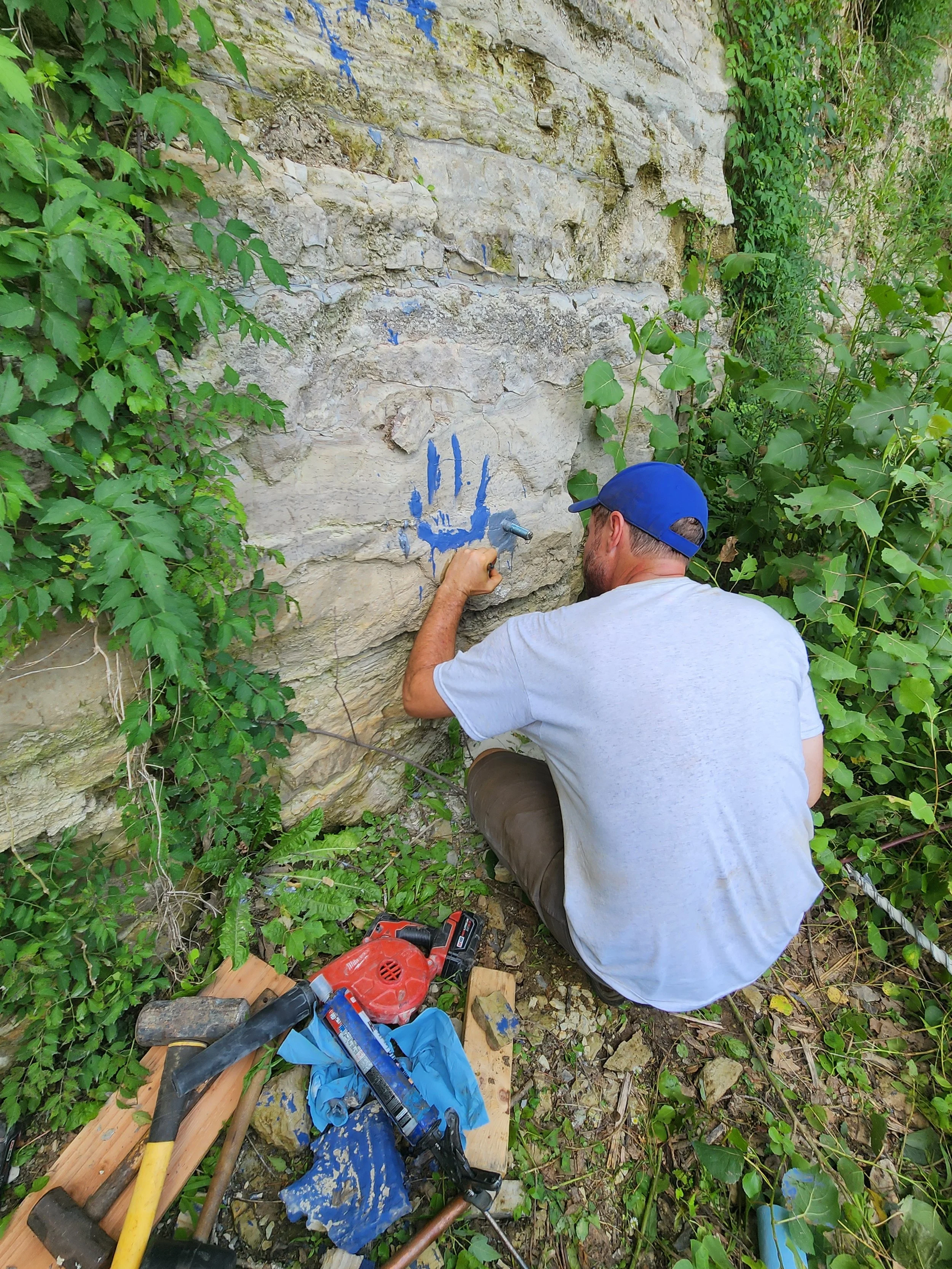
Boring and epoxy test -SATISFACTORY
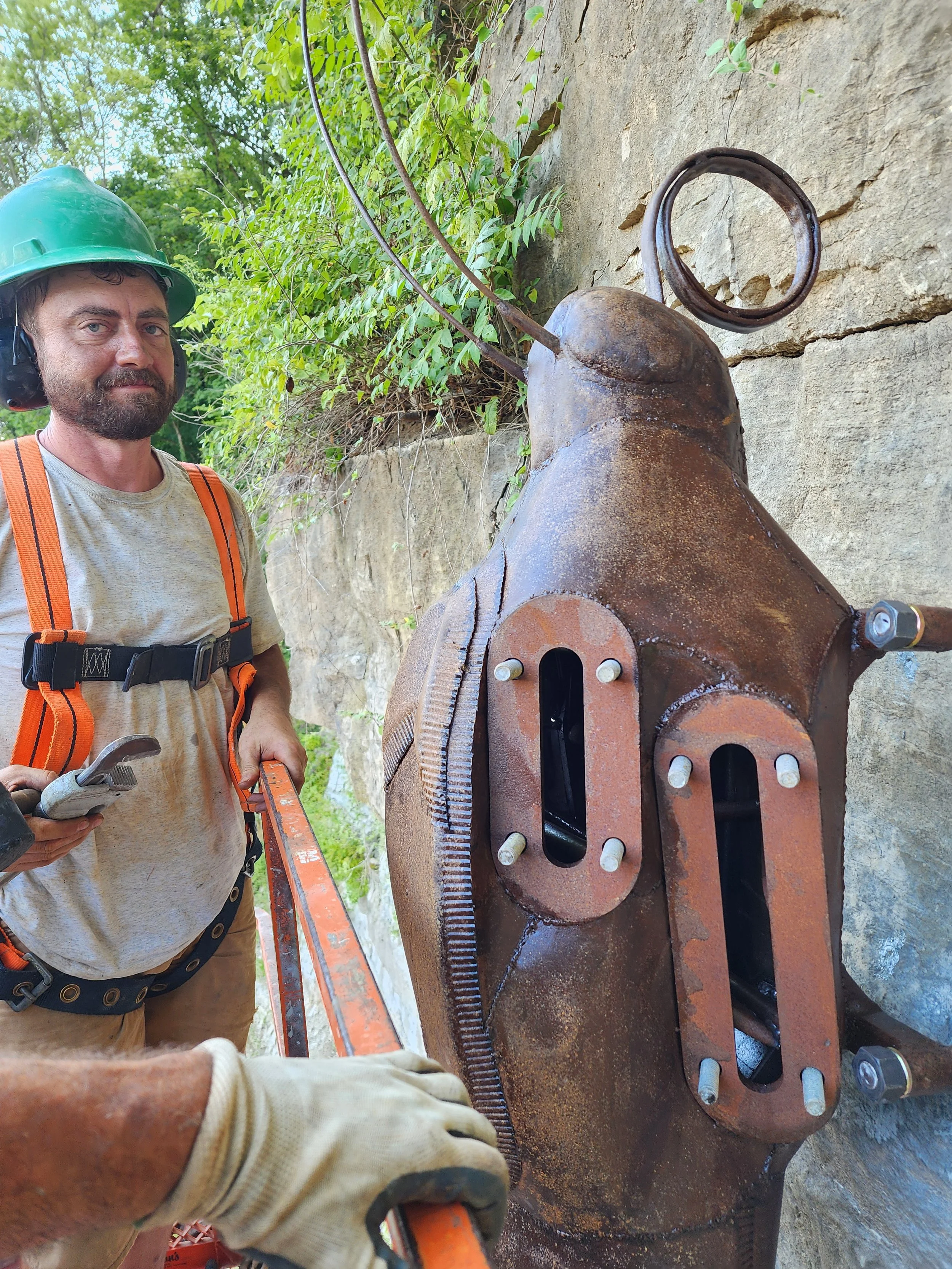
Safety First Pardner
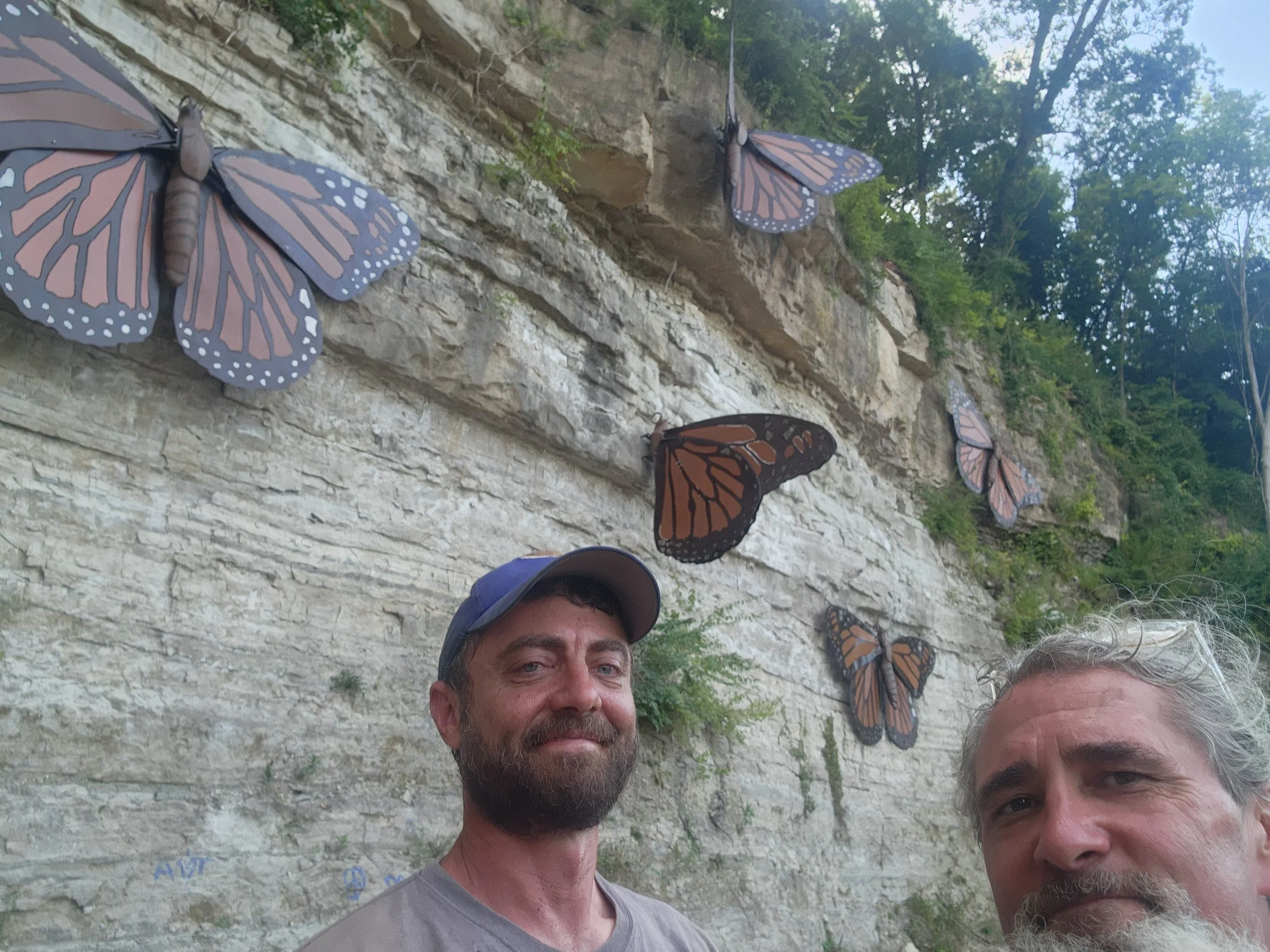
First Selfie
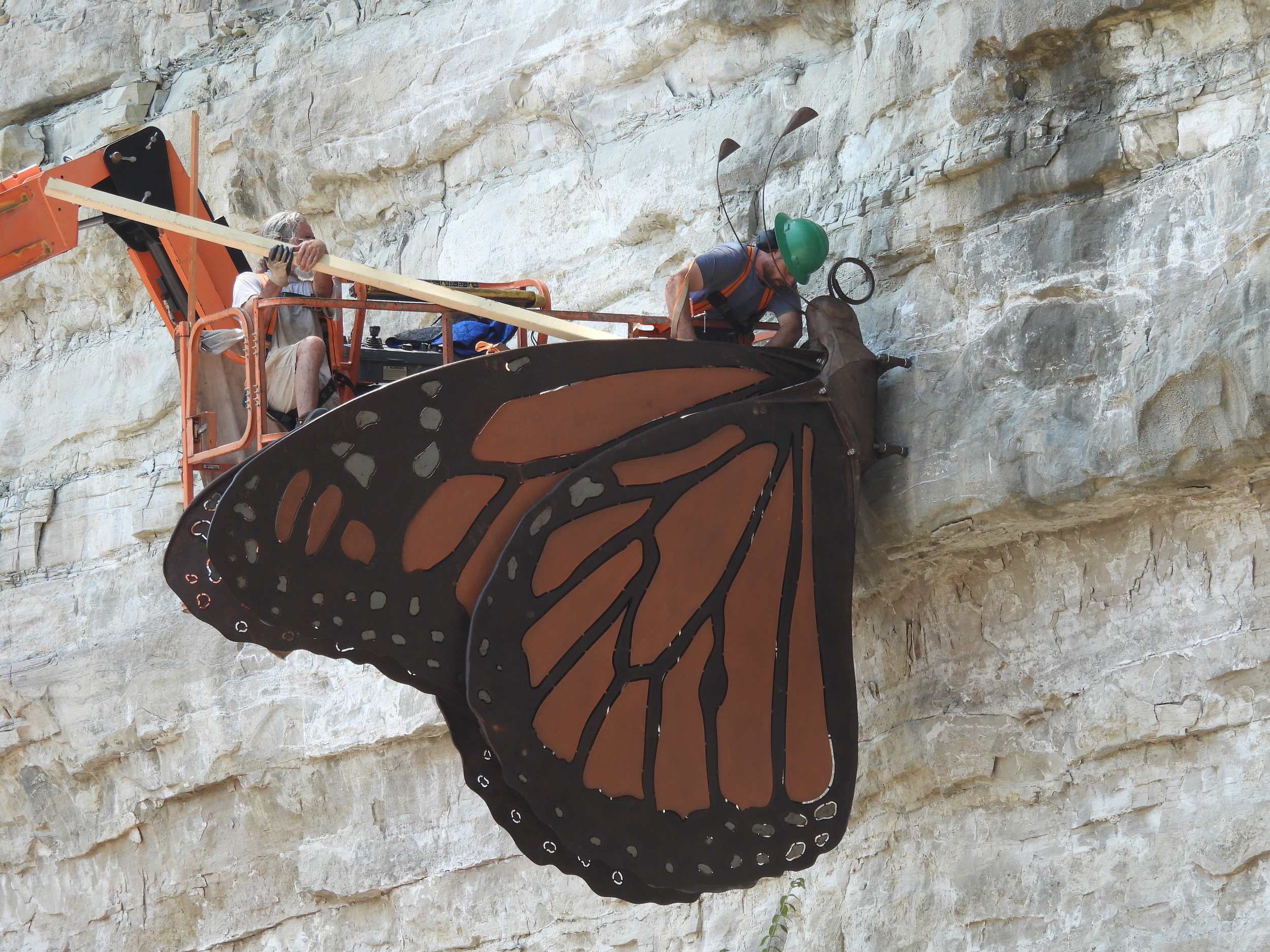
Wrestling the wing flanges into position
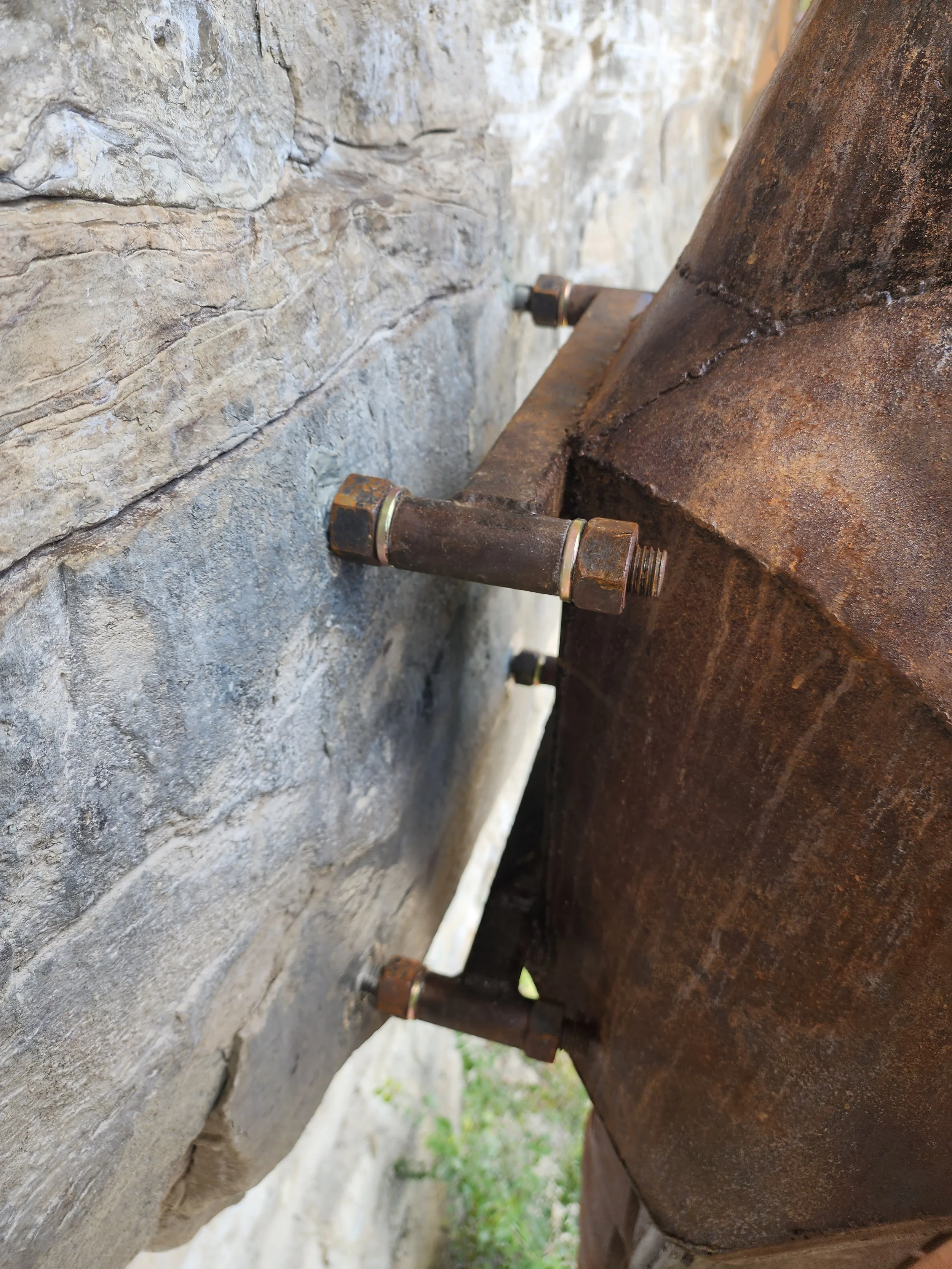
(4) 7/8" Threaded rod, drilled 20" into the bluff and attached with construction epoxy.
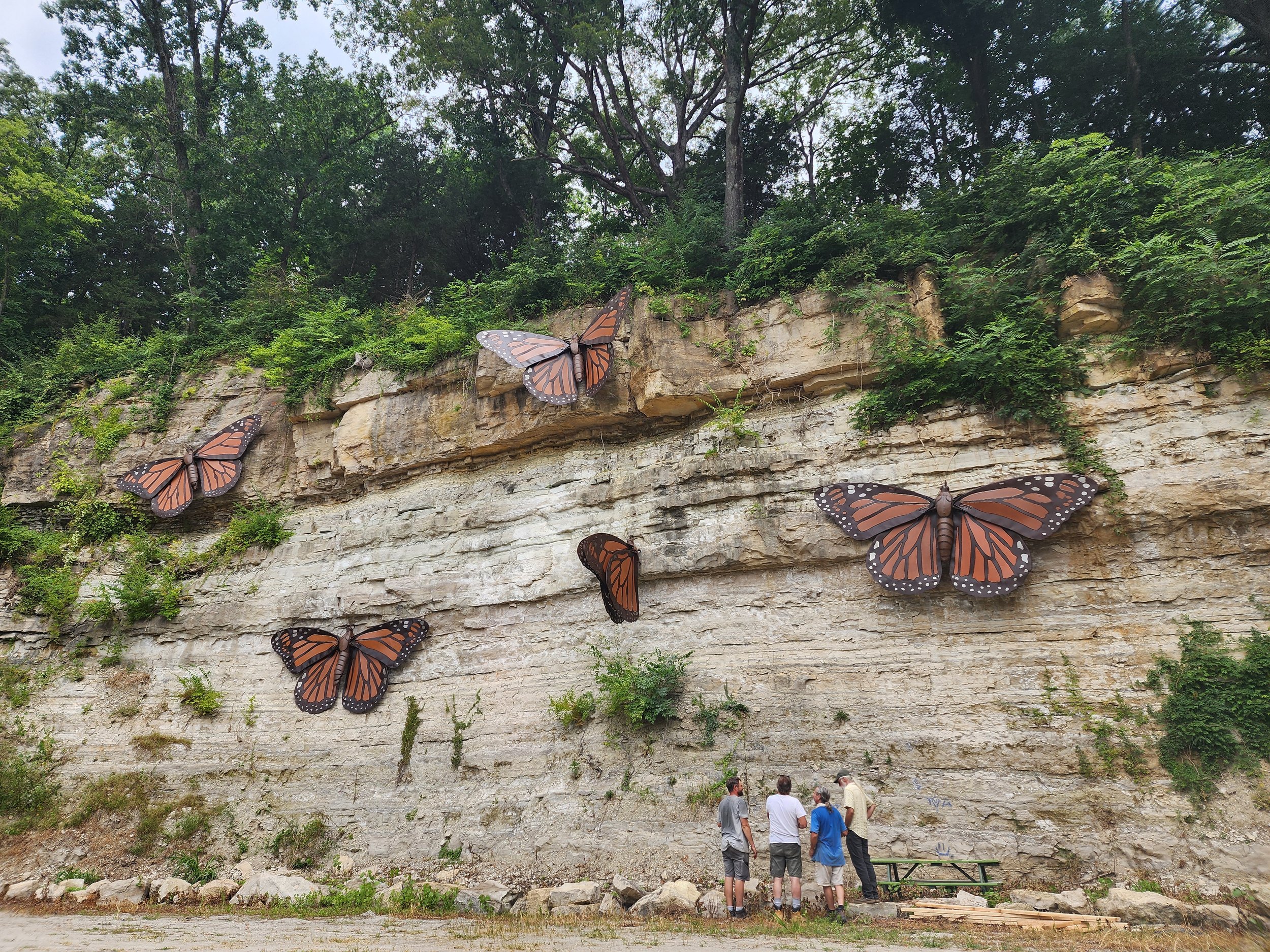
Admiring the final install with our pals
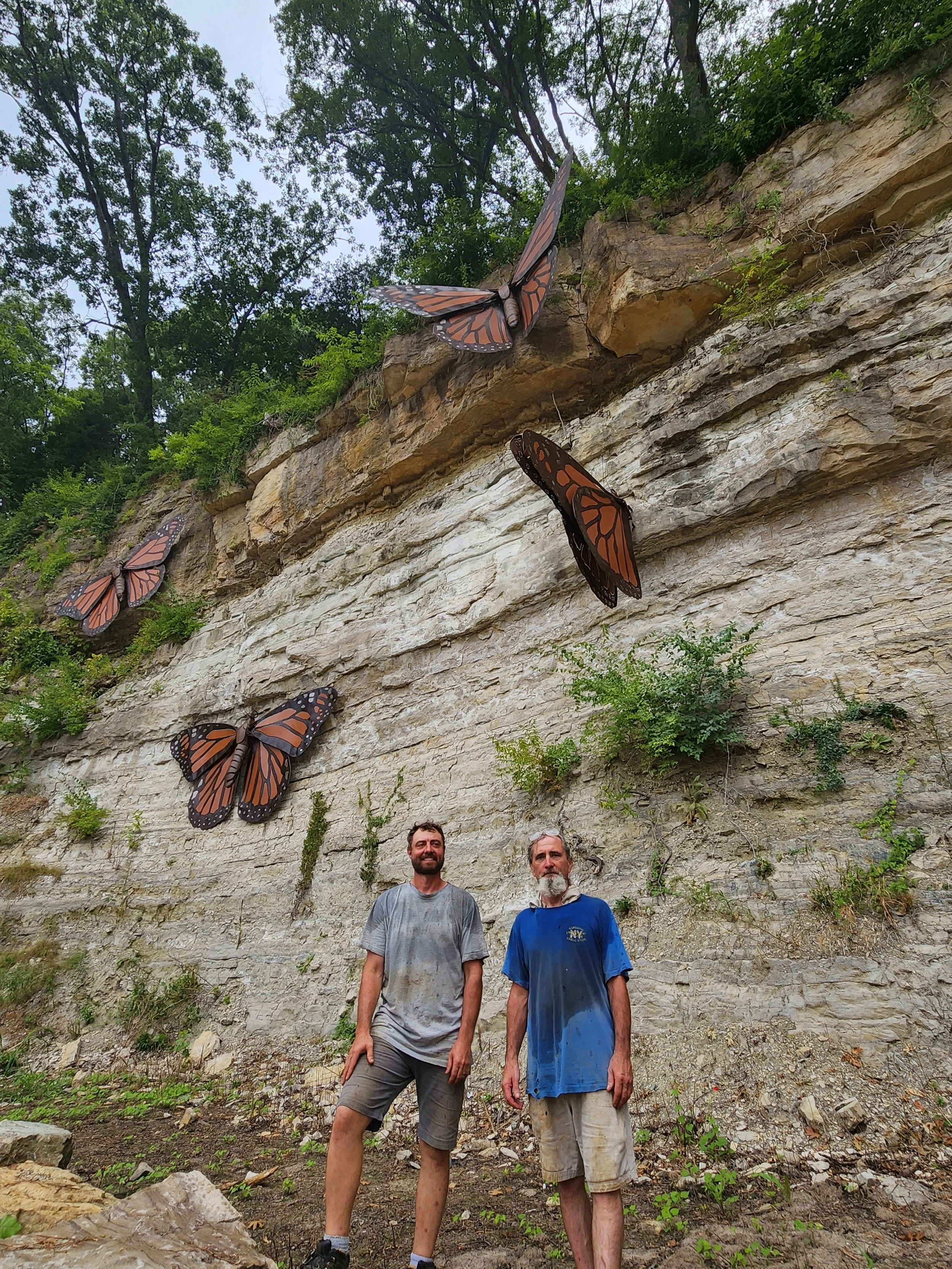
Hot final day on the install
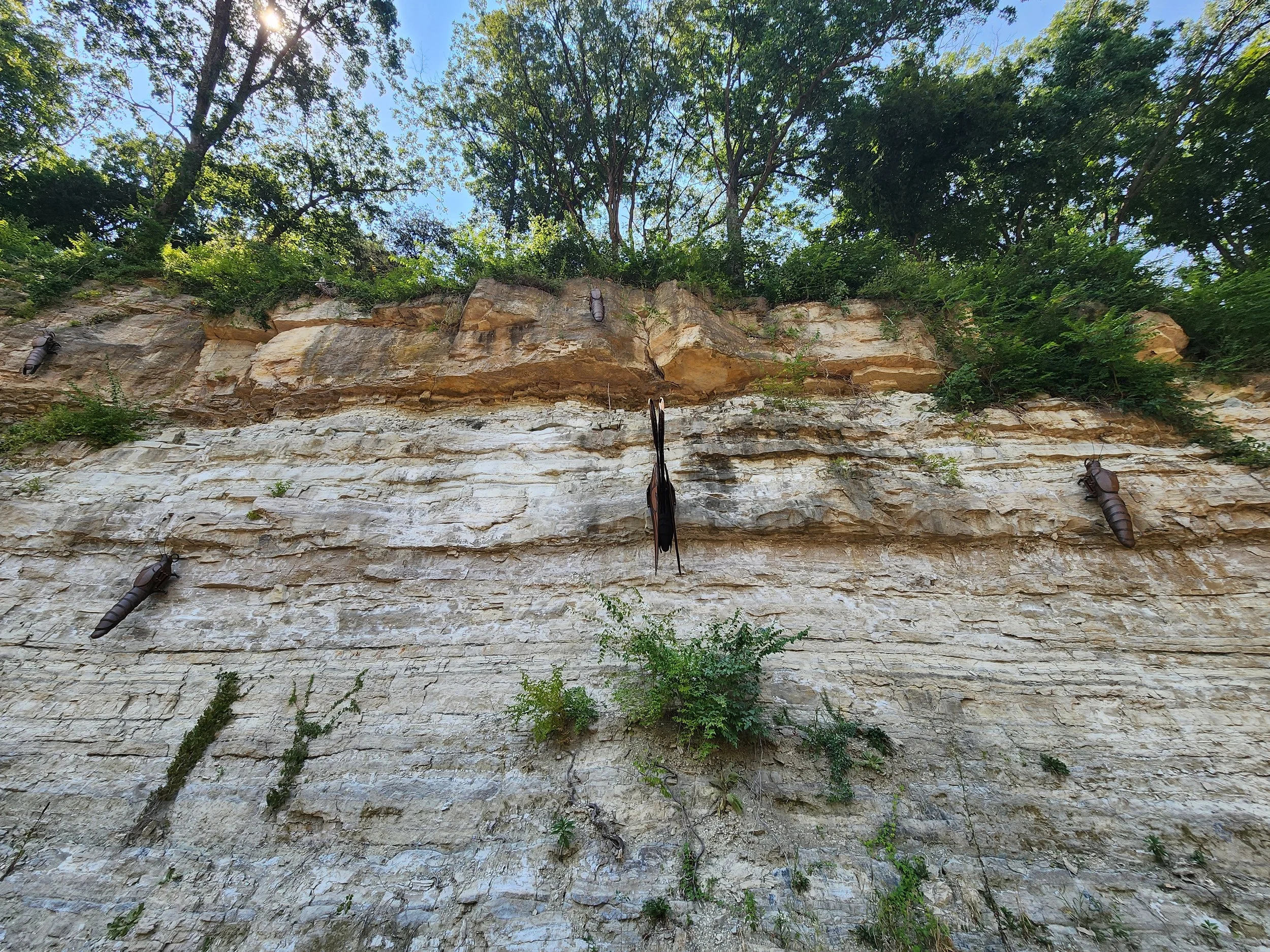
Bodies only, Day 1
Installation Order-Epoxied rods, bodies, wing sections
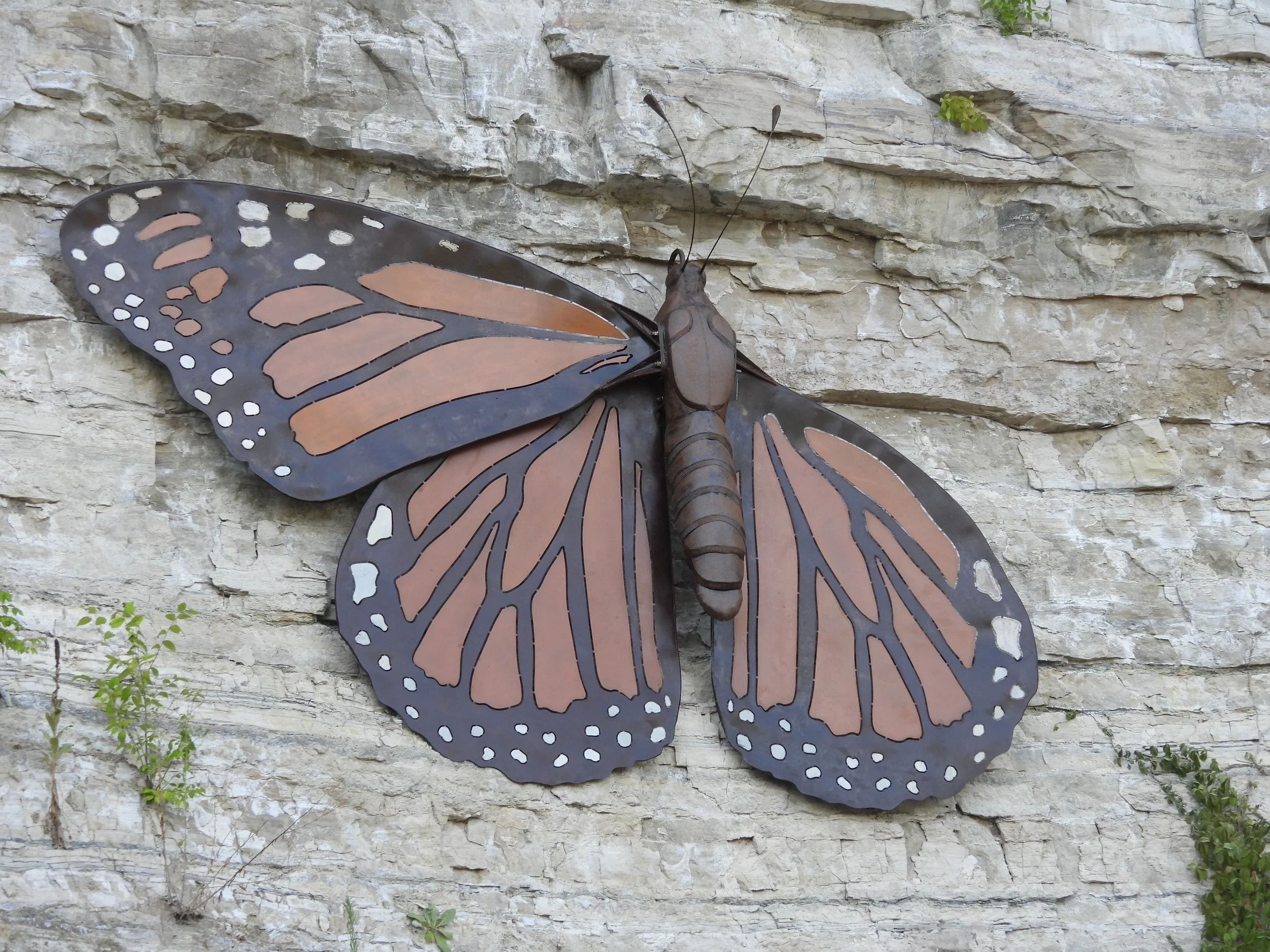
Our fav on body position
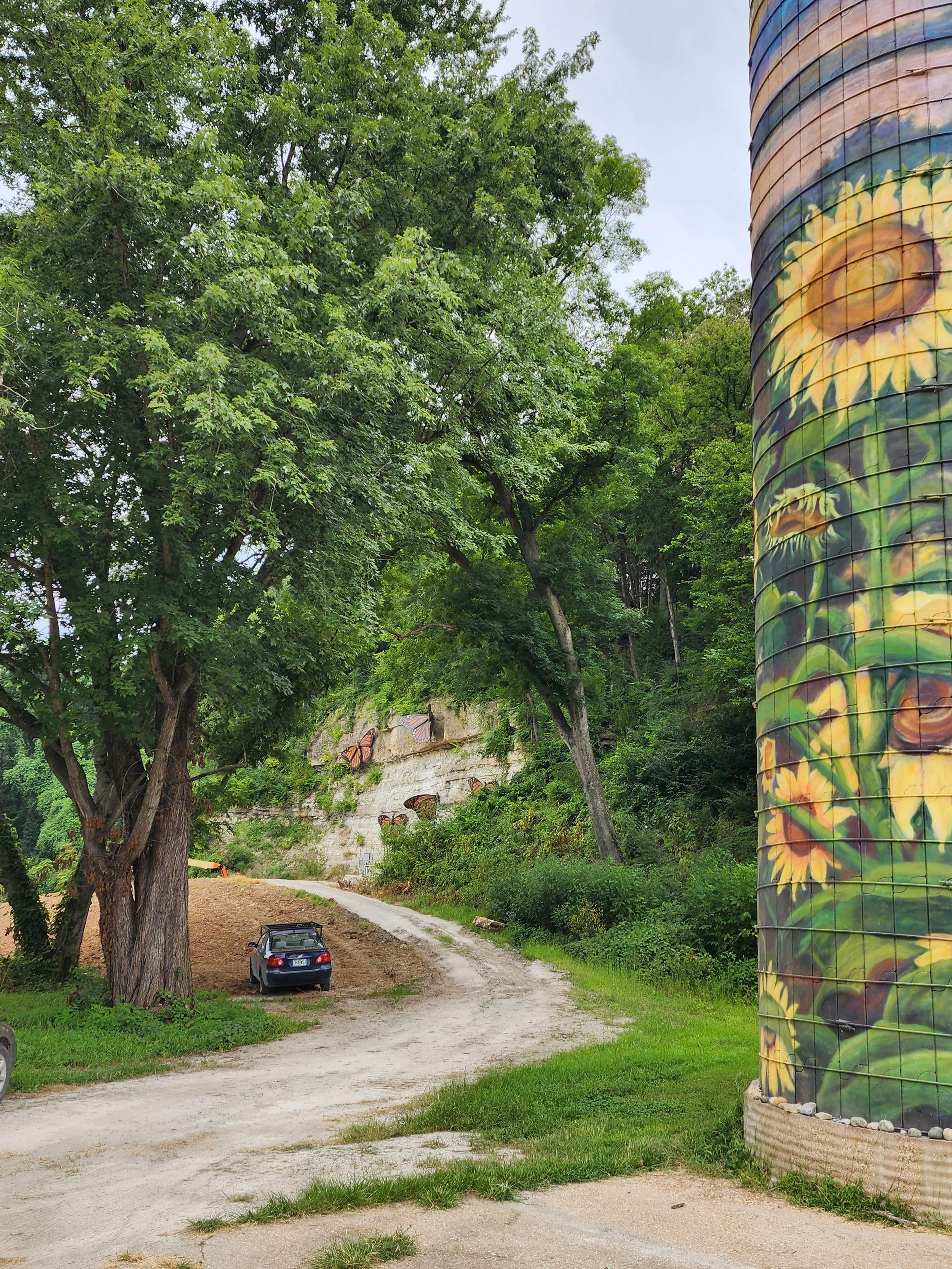
A great setting for these guys
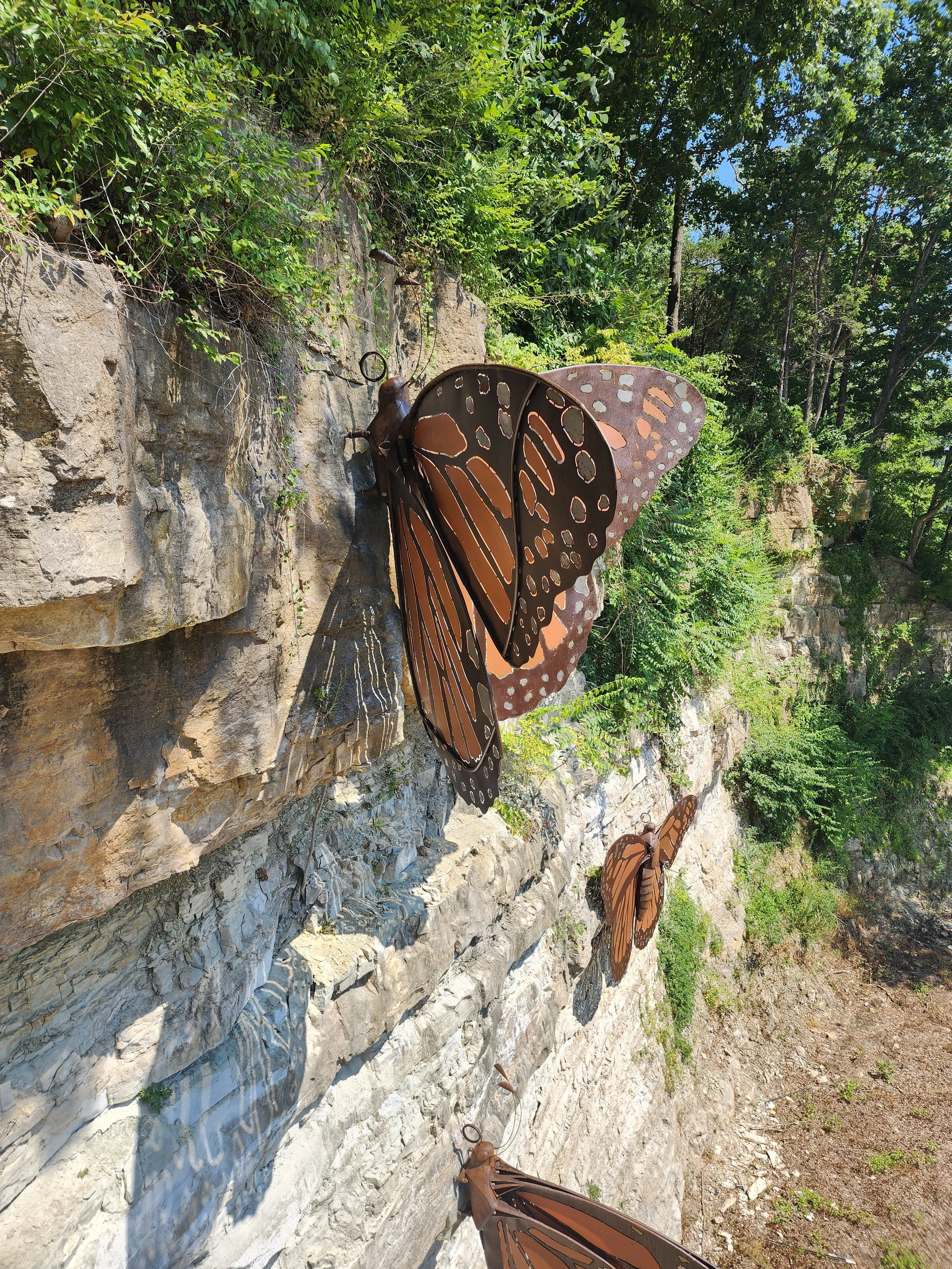
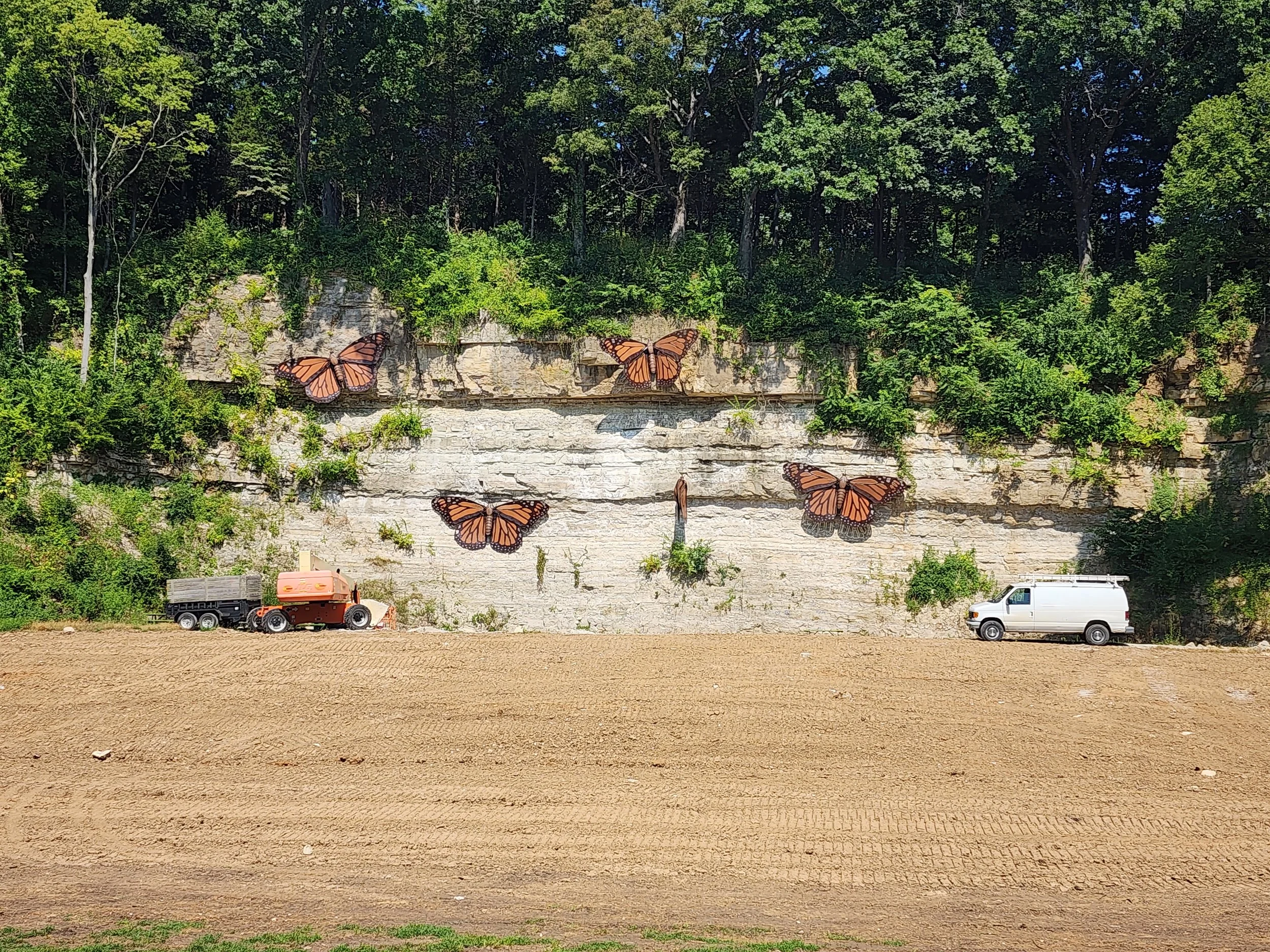
For scale, 80 ft man-lift and Ford F350, 1 ton van (in the foreground)
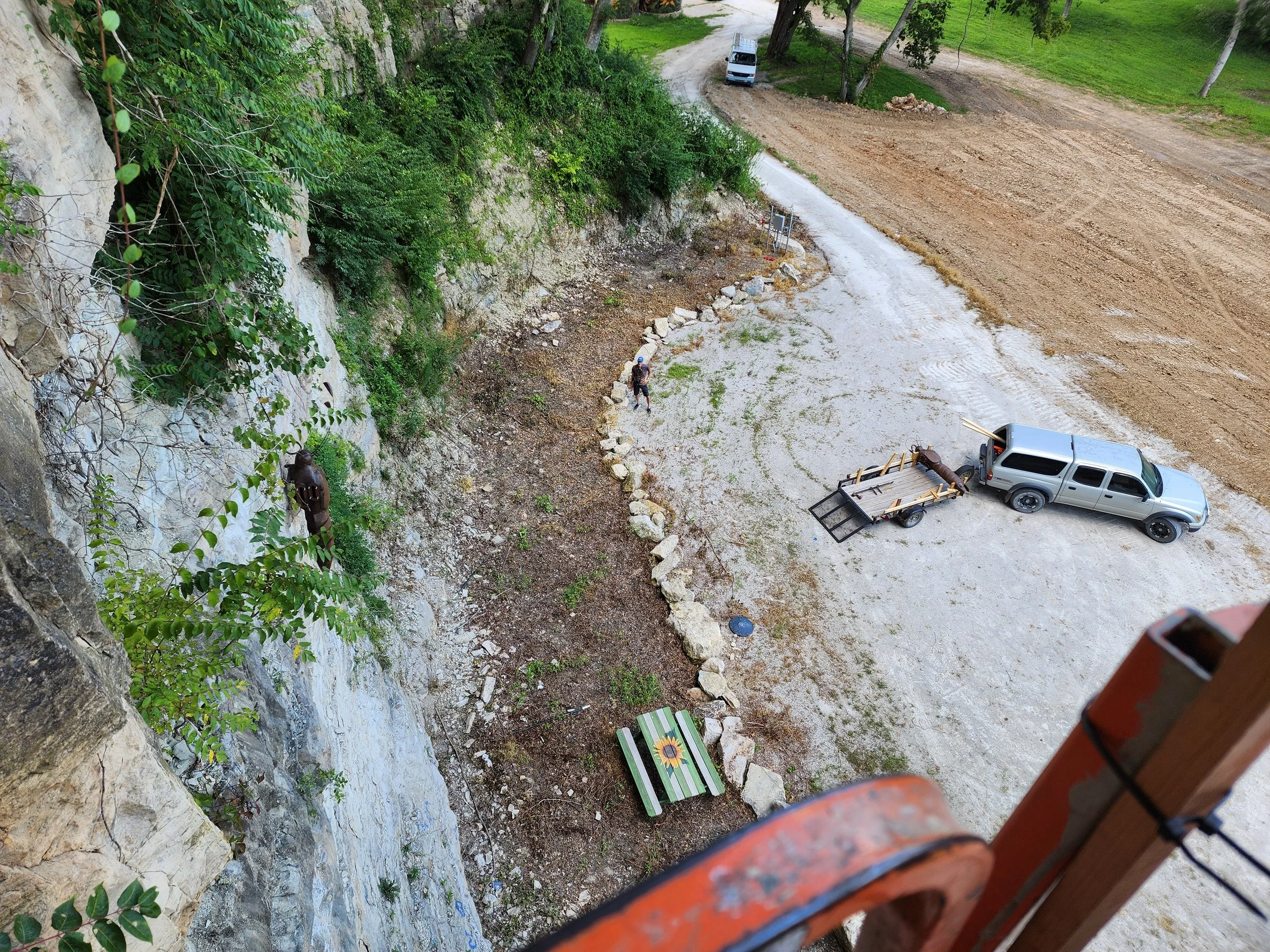
A view from the top
The males have the expanded scent gland (the ball) in the lower wing
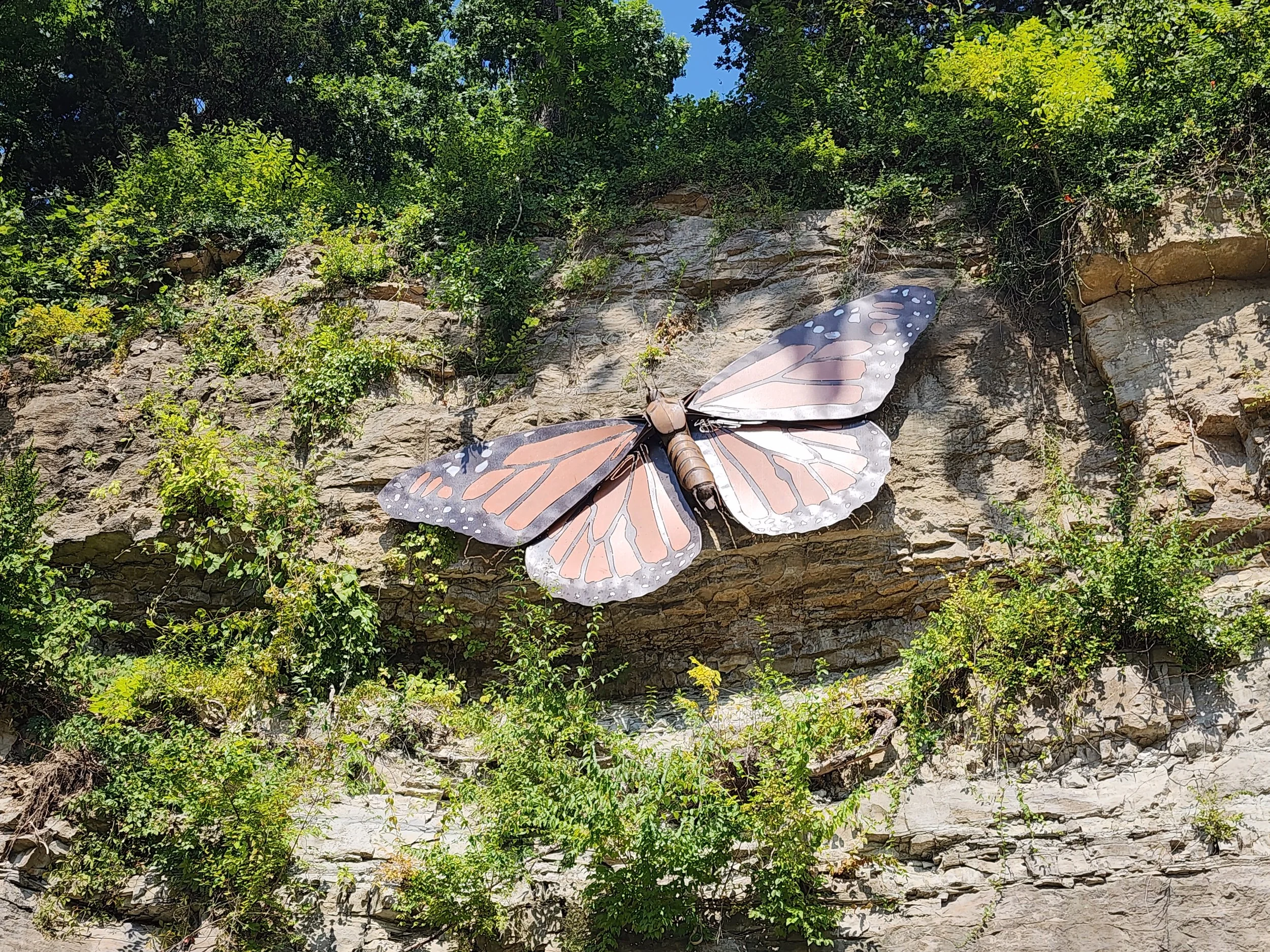
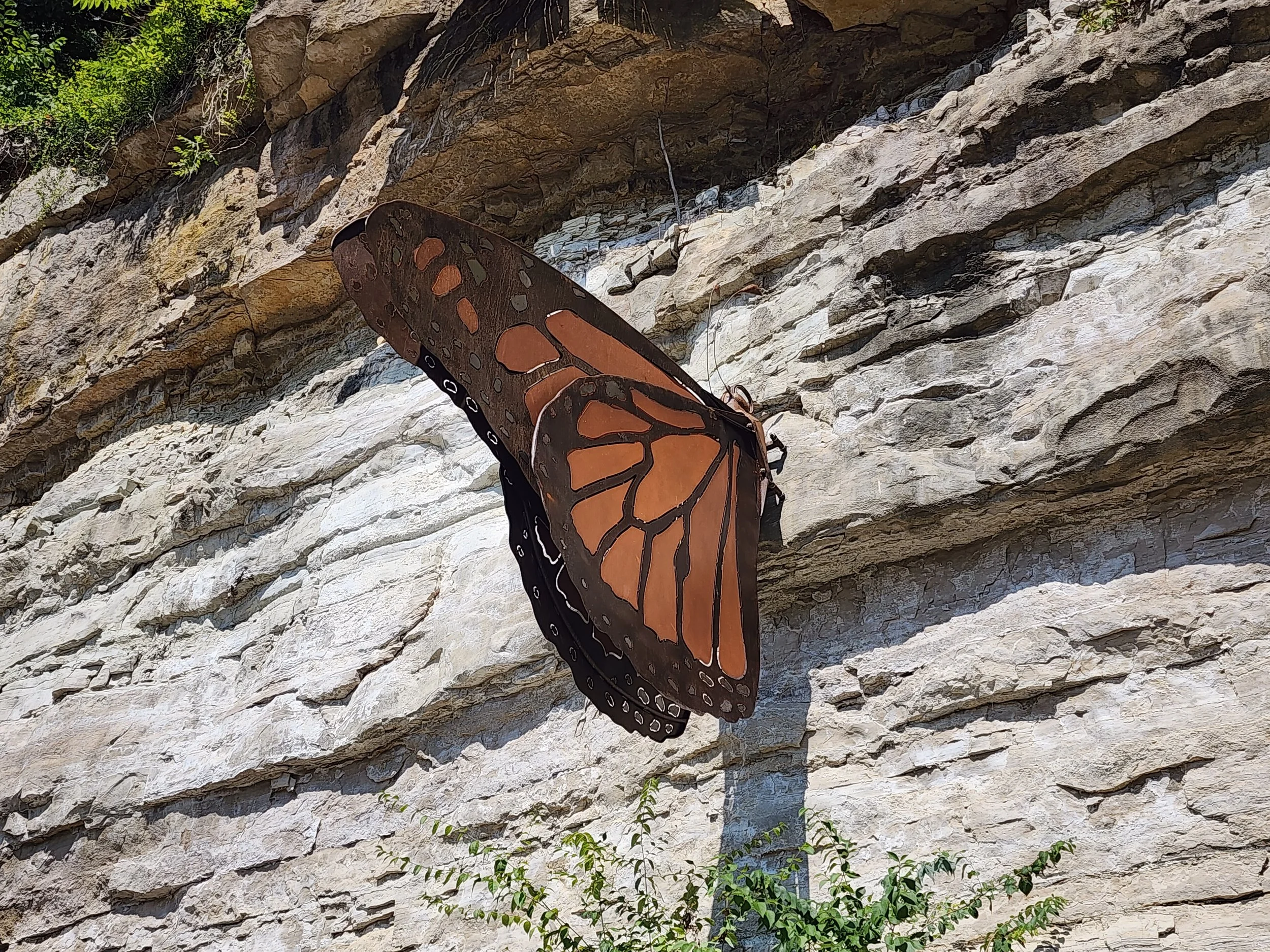
Position criteria included both aesthetic and rock integrity for secure rod attachment
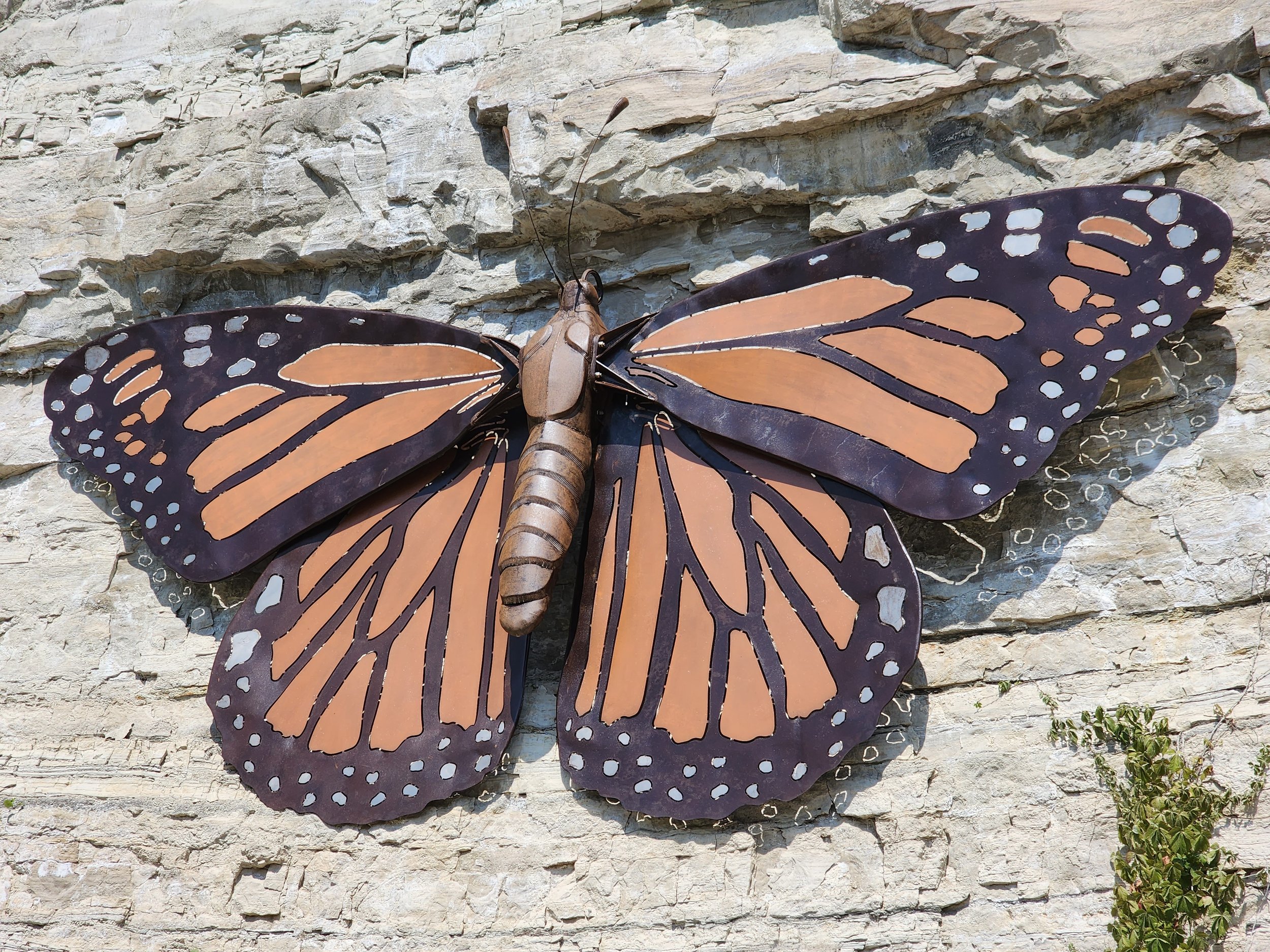
Females have wider "veins" and no scent gland. They also lack "claspers"
Male Claspers (at the end of thorax)
Augusta Missouri Metal Arts Home